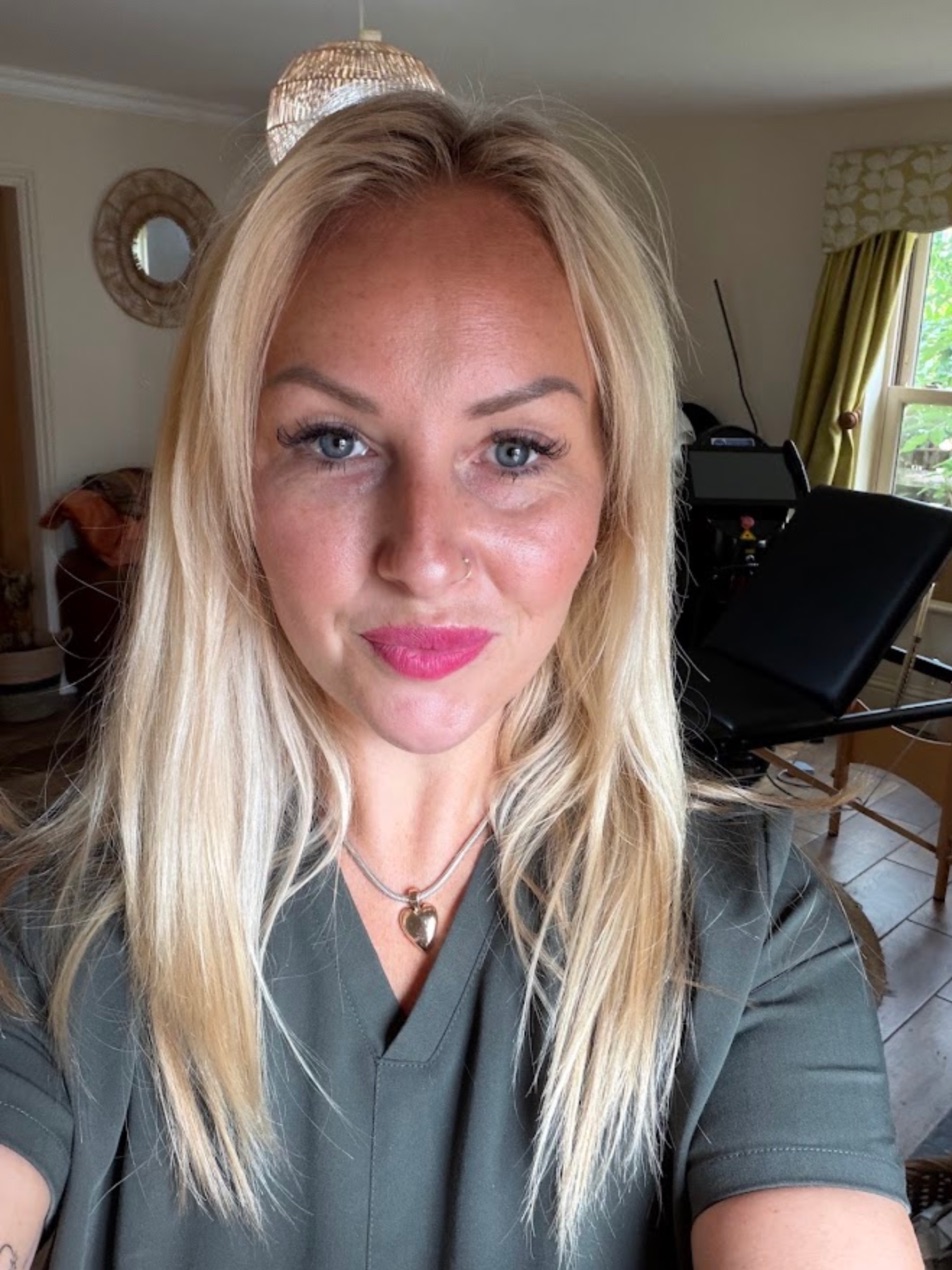
Alicia Marsland
Registered nurse · leads the clinic
- Registered nurse on the Nursing and Midwifery Council register
- Seventeen years in clinical practice
- Trained in laser hair removal and the clinic's other laser treatments
Laser light heats the pigment in hairs that are growing and damages the root, so less grows back. Over a course, most people see lasting results. Some hair may remain, and occasional top-ups keep it down. It depends on you: your hair colour, your skin, the area and your hormones.
£25per area, per session, fromLarger areas, such as legs and back, cost more. Most areas need six to ten sessions, so from £150 for a six-session course on one area.
The numbers, up front
Results
Laser can only reach a hair while it's growing, and at any moment many follicles are resting. Each session treats what's growing that day, and the next is timed to catch what has started growing since. Tap through to see how a course works.
Before. Some follicles are growing a hair; others are resting, or have just shed one. Only the growing ones can be treated, because that's when the hair is dark with pigment and still attached at the root.
After 2 sessions. The hairs that were growing on the day were treated, and shed over the following days and weeks. Resting follicles have started growing since, which is why one visit is never enough.
After 4 sessions. Each session catches the next lot as they come into growth, four to six weeks apart on the face and six to eight on the body. What grows back is often finer and lighter.
After a full course. Six to ten sessions for most areas. Most people see lasting results. Some hair may remain, often finer and lighter, and occasional top-ups keep it down. Hormonal hair, including PCOS, may need more.
Diagram of laser hair removal over a course. Not a client result. Some hair may remain; occasional top-ups keep it down.
Real results go here as clients finish their courses. We'll only ever show our own clients: unretouched, with the area and number of sessions stated, and with their written permission.
Who it's for
Upper lip, chin, jawline and neck. Facial hair is often finer, so it can take the top end of the course, and occasional top-ups.
Two of the areas that tend to respond best to laser.
Half or full legs, and forearms or full arms. Larger areas take longer each session and cost more; each is priced on its own.
Back and shoulders, chest, and the neck and beard line. A beard line is shaped and agreed with you first, because the results are lasting.
Darker skin can be treated, with more care. We assess your skin at the free patch test and tell you plainly if our laser isn't right for it.
Laser works on the hair you have now, but it doesn't treat the cause, so new hair may keep coming. Expect more sessions and regular top-ups. We talk it through before you start.
If hair has started growing somewhere new, suddenly, or alongside irregular periods, see your GP first.
How it works
A short, no-pressure call, within one working day. We ask about your hair colour and skin, so you know early whether laser is likely to work for you.
We check your skin type, your hair and anything you take that makes skin sensitive to light, then test the laser on a small patch. Both are free, and your area's price is confirmed here.
Your first session. Never on the same day as the patch test. How long it takes depends on the size of the area.
A session every four to six weeks on the face, or six to eight on the body, each timed to catch the next lot of growing hair. Six to ten sessions for most areas.
Some hair may come back over time, often finer than before. An occasional top-up keeps it down, priced when you need one.
Between sessions: shave or trim only. Waxing, plucking, threading and epilating pull out the hair the laser needs to find. Keep the area out of the sun and off the sunbed, and skip fake tan. Redness and slight swelling usually settle within a few hours.
Before you decide
Price
£25per area, per session, from
£150a six-session course on one area, from
Prices on the page, and your course total before you start.
Request a call backWho'll treat you
Registered nurse · leads the clinic
Laser and skin practitioner
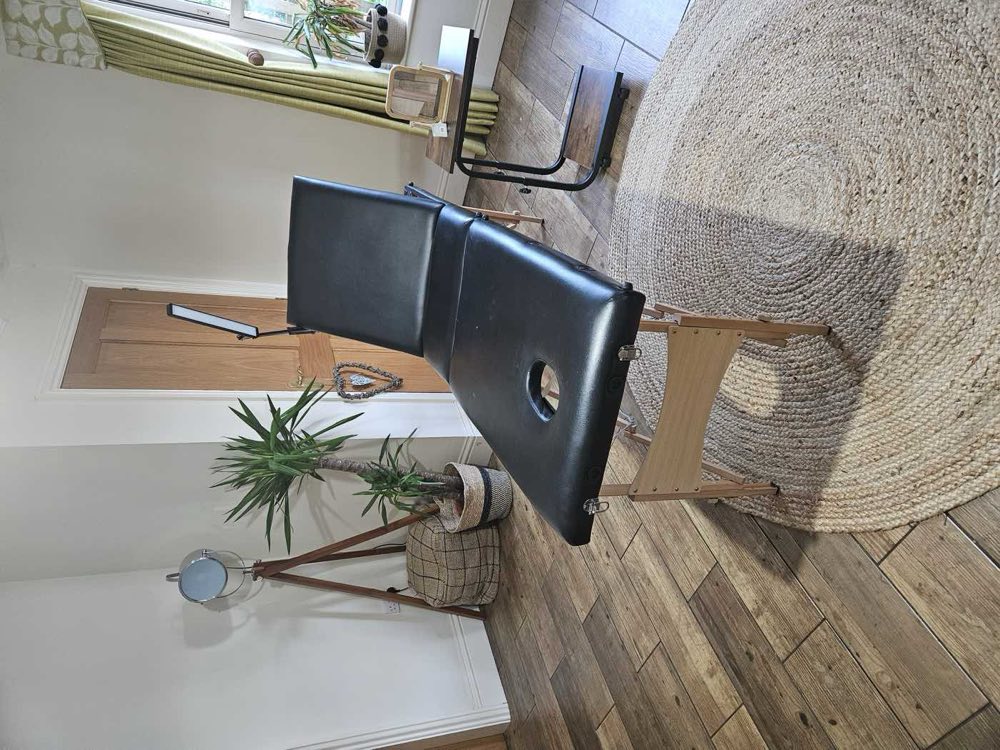
Both work in private treatment rooms at Glebe Farm, one client at a time.
Reviews
5.0
226 reviews
Reviews of Fill Good Aesthetics on Google, across all the clinic's treatments, as of October 2026. Fill Good Smooth is the clinic's laser hair removal service.
Would 100% recommend! Alicia took the time to talk to me about what I needed and was honest and kind, which is what you need when considering these kind of treatments. Alicia took the time to check in following treatments and put any worries I had to rest throughout the process.
Always a pleasant experience, very knowledgable and friendly. Always explains the treatment and after care in detail and ensures you are comfortable at all times. Highly recommend and I’m excited to try other treatments.
Alicia was incredibly friendly and kind from the moment I arrived for my first appointment. She made me feel completely comfortable and at ease, taking the time to explain everything clearly and answer all of my questions. I’m so happy with the experience and would highly recommend Alicia to anyone considering treatment for the first time.
Service is amazing, Alicia is super sweet and kind and does an amazing job at what she does. She makes it super easy to feel comfortable and n good hands. Treatment for tattoo removal has been great for me so far with results only getting better. Couldn't suggest more.
A selection from Google, quoted with each reviewer's permission. None of these is about laser hair removal yet; each is labelled with the treatment it describes.
Questions
Some may. Most people see lasting results, and what grows back is often finer and lighter. Some hair may remain, and occasional top-ups keep it down. It depends on the person: your hair colour, your skin, the area and your hormones all play a part. Anyone who promises the hair will never return is promising more than laser can do.
Six to ten for most areas, four to six weeks apart on the face and six to eight on the body. Laser only reaches hair that's growing at the time, so each session catches the next lot. Facial and hormonal hair often need the top of that range, or more.
Most people describe a quick snap, like an elastic band against the skin, with a flash of heat. Some areas are more sensitive than others. You can ask to stop for a moment at any point.
It needs pigment in the hair, so dark hair responds best. Grey, white, red and very fine blonde hair have too little of the right pigment and won't respond meaningfully. If that's you, we'll say so on the call or at the patch test, before you pay for a course.
Yes, darker skin can be treated, with more care, and the patch test matters even more. It's free, and it's where we assess your skin and tell you plainly if our laser isn't right for it.
Yes. Shaving or trimming are the only kinds of hair removal to use during a course. Waxing, plucking, threading and epilating pull out the hair the laser needs to find.
It works on the hair you have now, but it doesn't treat the cause, so new hair may keep growing. Expect more sessions than most people need, and regular top-ups. PCOS is sometimes now called PMOS. If the hair is new, has appeared suddenly or comes with irregular periods, see your GP first.
Redness and slight swelling, which usually settle within a few hours. Less often, patches of skin turn darker or lighter, usually for a while and rarely for longer; that's more likely on darker or tanned skin. Rarely, blistering, scarring, or hair growing thicker around the treated area. It's also a commitment: several months of sessions, and keeping the area out of the sun.
From £25 per area, per session, so six sessions on one area is from £150 and ten is from £250. Larger areas, such as legs and back, cost more. Each area is priced separately, and your area's price is confirmed at your patch test, before you book any sessions.
It shows how your skin reacts to the laser at the settings planned for you. It's free, and it's done at least 24 hours before your first session, and again after a long gap or a change in medication. If anyone offers to treat you on the day you first walk in, a corner is being cut.
Yes. The back and shoulders, chest, and the neck and beard line are the usual men's areas. A beard line is agreed carefully before the first session, because the results are lasting.
Alicia, or Libby from her team. Both are fully trained on the clinic's laser.
No obligation
Takes a minute. One of the team calls you back, not a call centre.
Getting here
Private treatment rooms at Glebe Farm, between Spalding and Boston, with free parking outside.
Glebe Farm, Church EndApproximate driving times from each town centre, in normal traffic, checked against a route planner.